About
Learning to grow real food
We moved north from southwest Florida in July 2025. That first summer there were two tomato plants on the porch, and they gave us far more than two plants had any business giving. So in 2026 we went much, much bigger — less for the yield than for the skill: to learn how to actually feed ourselves, our friends, and people who do not have enough.
The ground
It was a horse pasture
The fence is still up. The grass is still pasture grass, and mostly still mown.
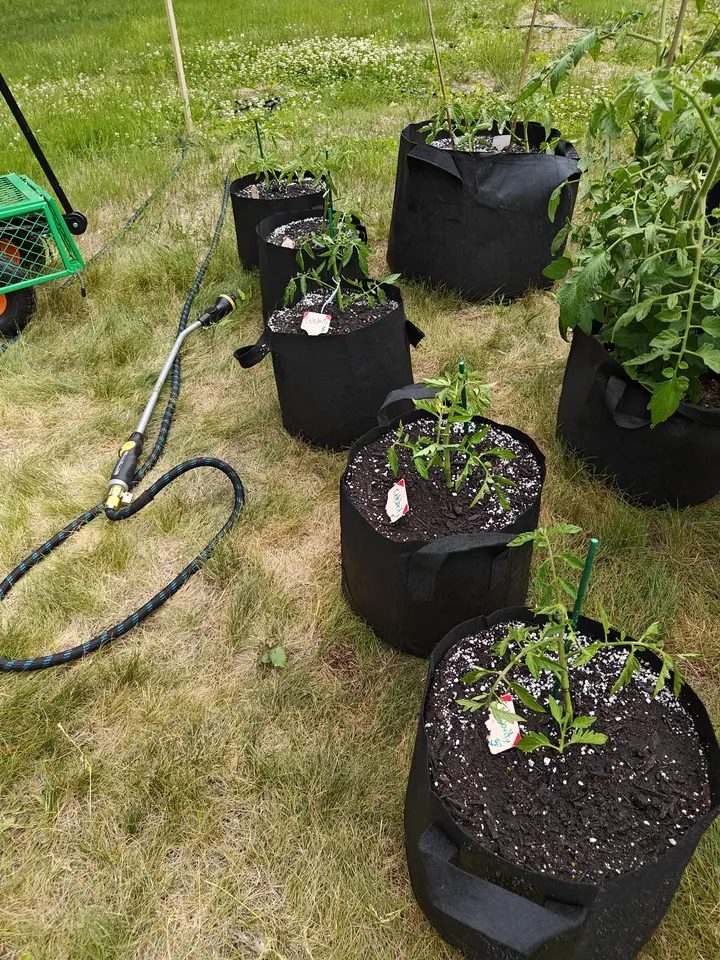
Most of it grows above the field rather than in it — a hundred-odd fabric bags and a few raised beds set out on the mown grass, where a thing that is not working can simply be picked up and moved. What goes into the ground goes in for a reason: the sprawlers, which need the room — melons, watermelon, beans, squash, okra, leeks, shallots — and the plantings meant to stay, the peach, the blueberries and the brambles.
This is zone 5b, mid-slope above the Connecticut River Valley, in the stretch of it people here call the Pioneer Valley. Frost finds us before it reaches the valley floor and well after it has been through the hilltowns above us, which matters enormously and is surprisingly hard to look up.
The stable
Everything starts in the old stable
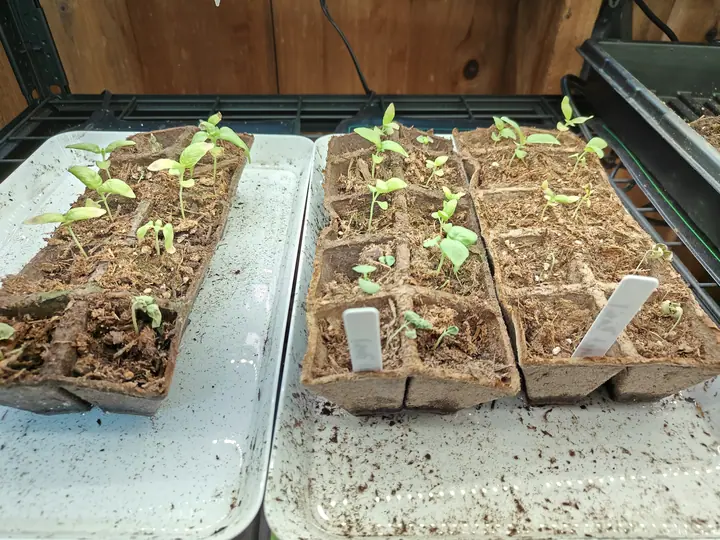
The horses are long gone and their stable is the potting shed now. Seed trays go under lights against the timber wall, and by March it is the warmest, most hopeful room on the property.
There is almost always music, in the stable and out in the beds — Phish, the Grateful Dead, Goose, Conjure One, Thievery Corporation, The Chicks. A long afternoon of transplanting goes better with a set on.
Why
Food, and knowing how
Underneath the wanting-to-feed-people there is a plainer reason, and it is not a romantic one.
Food supply is not guaranteed and it can go wrong quickly. Growing is a skill, skills take years to get any good at, and they are worth having in a world holding this many unknowns. A season spent learning to do it properly and at scale is a season well spent whether or not anything ever goes wrong — and if it does, the knowing is the part you cannot go out and buy.
And it is a joy. That is not a small part of it. A garden this size is an enormous amount of work, and nearly all of it is the good kind: outside, hands in it, something coming ripe every week from June onwards.
The record
We wanted to actually know
Every picking gets weighed and written down. Not for anyone else — because after one season of guessing, we wanted to know what this garden really did.
Which crops earned their space and which quietly did not. Whether the peppers really were better in the bags. What a hundred pounds of tomatoes looks like spread across eleven weeks. Memory is generous and completely unreliable about all of it, so the scale settles the argument instead.
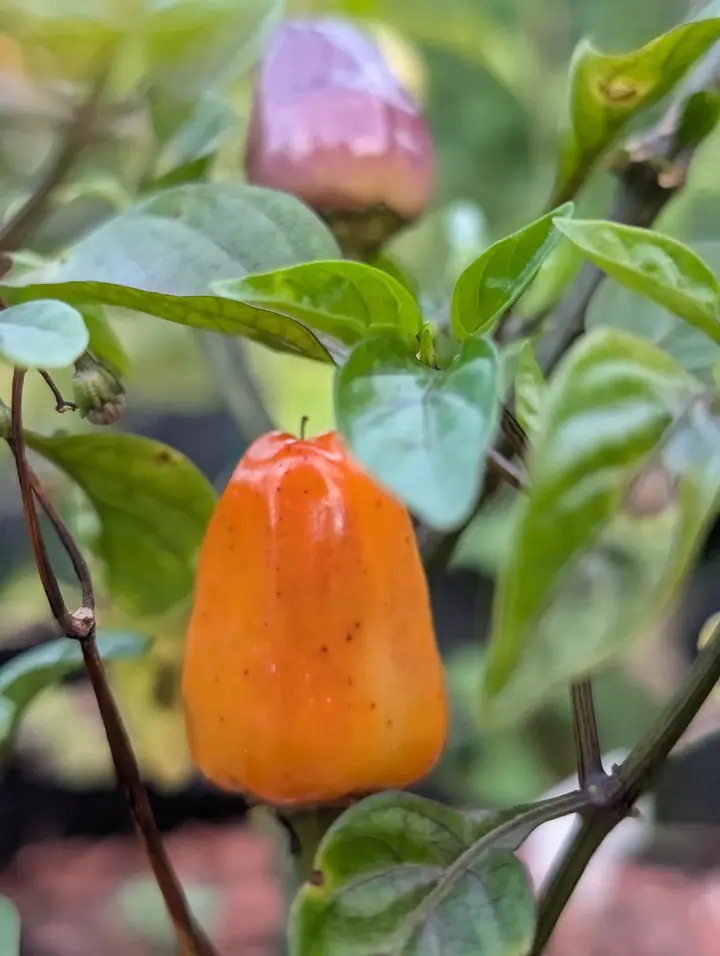
This site is that record, opened up: every figure the season produced, and a thousand photographs of what it looked like while it did. Pepper plants gone chalk-white in July, leaf and fruit alike, under the kaolin clay that keeps the Asiatic garden beetles off. A watermelon cut open on the eleventh of August, deep pink-red and scattered with flat dark seeds. Purple basil gone almost aubergine in full sun, and one Chinese 5-Color carrying a dusky purple fruit and a swollen apricot-orange one on the same stem.